
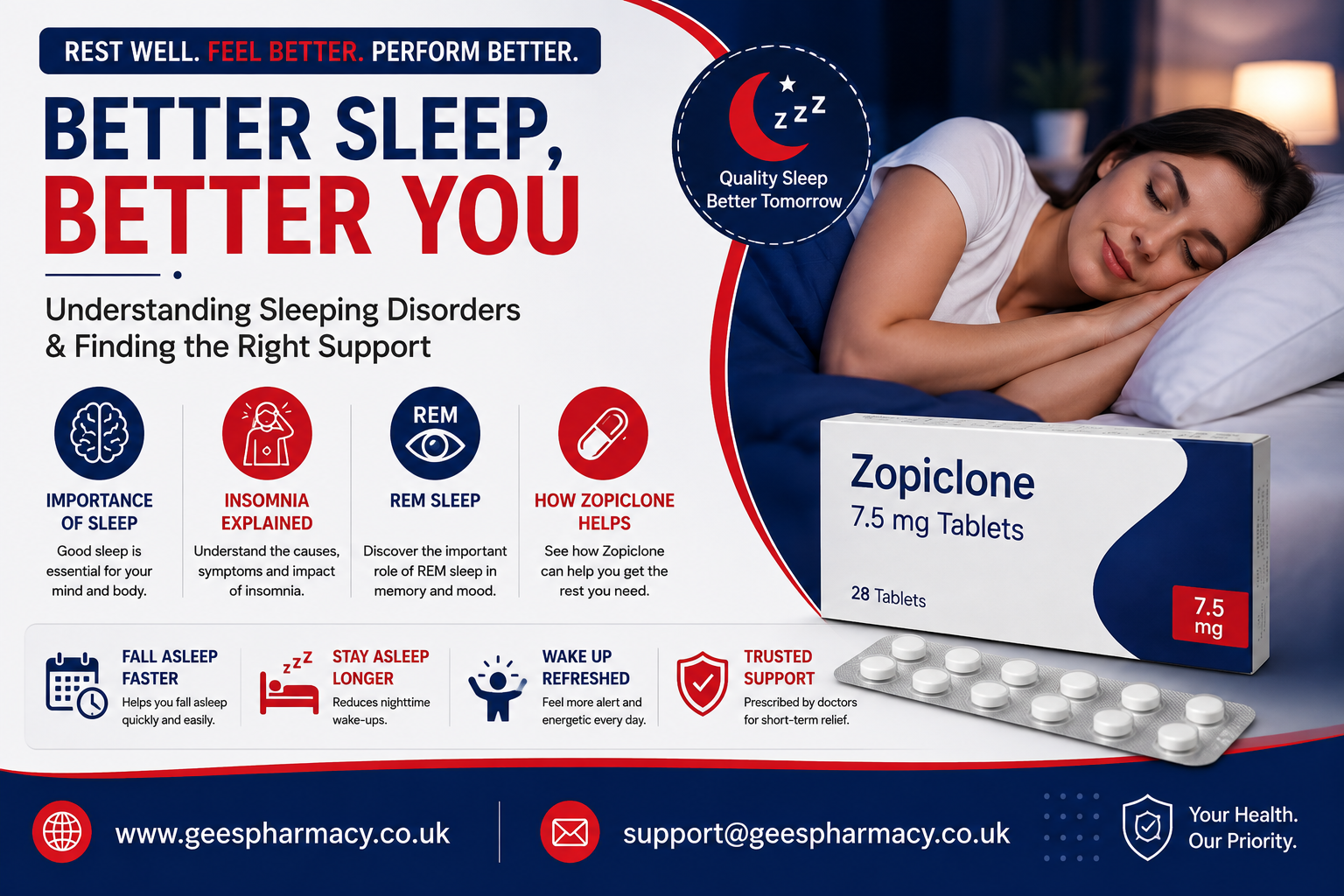
Sleeping Disorder: The Importance of Sleep, Insomnia Explained, REM Sleep & How Zopiclone Helps
-
Aug, 15, 2026
Sleep is one of the most important functions of the human body, yet millions of people struggle to get enough good-quality sleep. Difficulty falling asleep, waking repeatedly during the night, or waking too early can affect concentration, mood, energy and everyday performance.
A sleeping disorder can have many causes, including stress, anxiety, lifestyle habits, irregular working hours, physical health conditions and certain medicines. One of the most common sleep disorders is insomnia.
Understanding how sleep works, what happens during REM sleep, why insomnia develops and which treatments may be considered can help people make more informed decisions about their sleep health.
For people experiencing persistent insomnia, a healthcare professional may recommend behavioural approaches first. In some circumstances, a prescription sleeping medicine such as zopiclone may be considered for short-term treatment.
Important: Zopiclone is a prescription-only medicine in the UK. It should only be used when prescribed or otherwise supplied legally by an authorised healthcare professional or pharmacy.
Why Is Sleep So Important?
Sleep is much more than simply resting at the end of the day. During sleep, the brain and body go through a series of biological processes that support physical recovery, memory, learning, mood and normal daytime functioning.
Most adults generally need around 7 to 9 hours of sleep, although individual requirements vary.
Good-quality sleep can help support:
Physical recovery and restoration
Memory and learning
Concentration and mental performance
Emotional regulation
Normal energy levels
Daytime alertness
Overall physical and psychological wellbeing
When sleep is repeatedly interrupted or insufficient, people may experience tiredness, irritability, difficulty concentrating and reduced daytime functioning.
This is why persistent sleep problems should not simply be dismissed as a few bad nights.
What Is a Sleeping Disorder?
A sleeping disorder is a condition that interferes with normal sleep patterns, making it difficult to obtain adequate or restorative sleep.
Sleep problems can take different forms. Some people struggle to fall asleep, while others fall asleep normally but wake repeatedly during the night.
Common sleep problems include:
Insomnia
Sleep apnoea
Restless legs syndrome
Narcolepsy
Circadian rhythm sleep disorders
Parasomnias and sleepwalking
Among these conditions, insomnia is one of the most commonly recognised sleep problems.
Insomnia Explained: What Is Insomnia?
Insomnia is a sleep disorder involving persistent difficulty getting to sleep, staying asleep or getting enough sleep to feel rested.
According to the NHS, common symptoms include difficulty falling asleep, waking several times during the night, waking too early, feeling tired after waking and experiencing daytime problems such as irritability or difficulty concentrating.
Insomnia can generally be described as:
Short-Term Insomnia
Short-term insomnia lasts for less than three months and can occur during periods of stress, illness, travel, changes in routine or other temporary circumstances.
Long-Term Insomnia
Insomnia lasting three months or longer is considered long-term insomnia. Persistent symptoms can significantly affect daytime life and may require professional assessment.
What Causes Insomnia?
There isn’t always one single cause of insomnia.
Common contributing factors include:
Stress and Anxiety
Worry about work, relationships, finances or other life circumstances can make it difficult for the brain to switch into a relaxed state at bedtime.
Poor Sleep Routine
Going to bed and waking at substantially different times each day can interfere with a consistent sleep-wake rhythm.
Caffeine and Stimulants
Coffee, tea, energy drinks and other sources of caffeine can make it harder to fall asleep, particularly when consumed later in the day.
Screen Use
Using phones, tablets and computers immediately before bed can contribute to poor sleep habits and increased alertness.
Physical or Mental Health Conditions
Pain, breathing problems during sleep, restless legs and certain mental health conditions can contribute to sleep difficulties.
Shift Work and Jet Lag
Working irregular hours or travelling across time zones can disrupt the body’s normal circadian rhythm.
The NHS recommends addressing sleep habits and underlying causes rather than relying immediately on sleeping medication.
Insomnia Therapists: How They Help You Sleep Better
Struggling to fall asleep, waking repeatedly during the night, or waking much earlier than planned can make everyday life difficult. When these problems continue, finding the right support can be an important step towards improving sleep.
Insomnia therapists specialise in helping people understand the thoughts, behaviours and habits that can contribute to persistent sleep problems. One of the most established approaches is Cognitive Behavioural Therapy for Insomnia (CBT-I), a structured form of therapy specifically designed for insomnia.
In the UK, specialist sleep services and therapists may provide CBT-I through face-to-face appointments, online programmes, telephone sessions or group-based treatment. NHS sleep services such as UCLH describe CBT-I as a commonly offered treatment for adults with insomnia.
This guide explains what insomnia therapists do, how CBT-I works, when you should consider professional help and how treatment can fit into a broader approach to better sleep.
What Happens During Sleep?
Sleep isn’t a single state. The brain moves through several stages repeatedly throughout the night.
These stages can broadly be divided into:
Non-REM sleep
REM sleep
Non-REM sleep includes lighter stages and deep, slow-wave sleep. REM sleep is associated with rapid eye movements and vivid dreaming.
A typical sleep cycle lasts roughly 90 minutes, although the exact duration varies. The stages repeat several times throughout the night.
What Is REM Sleep?
REM stands for Rapid Eye Movement.
During REM sleep, brain activity increases and most vivid dreaming occurs. REM sleep is also associated with important processes involving learning, memory and emotional processing.
Sleep architecture changes throughout the night. Deep sleep tends to be more prominent earlier in the night, while periods of REM sleep generally become longer later in the night.
This is one reason why getting enough total sleep matters: consistently cutting sleep short can reduce the amount of time available for later sleep stages.
REM Sleep and Memory
Sleep plays an important role in processing information and supporting memory. REM sleep is one component of this complex process, alongside other sleep stages.
REM Sleep and Dreams
Dreaming can occur during different stages of sleep, but vivid dreams are particularly associated with REM sleep.
Why REM Sleep Matters
A healthy sleep pattern involves cycling through different sleep stages rather than remaining in one stage throughout the night.
How Can You Improve Sleep Naturally?
Before considering medication, improving everyday sleep habits can be an important part of managing insomnia.
The NHS recommends several practical measures, including maintaining regular sleep and wake times, relaxing before bed, keeping the bedroom dark and quiet, exercising during the day and avoiding caffeine and other stimulating activities close to bedtime.
Try the following:
1. Keep a Consistent Sleep Schedule
Go to bed and wake up at approximately the same time each day.
2. Create a Relaxing Bedtime Routine
Give yourself time to wind down before going to bed. Reading, taking a warm bath or practising relaxation techniques may help.
3. Reduce Evening Caffeine
Avoid caffeine later in the day if it interferes with your sleep.
4. Make Your Bedroom Sleep-Friendly
A dark, quiet and comfortable environment can support better sleep.
5. Limit Screen Time Before Bed
Try putting phones and other electronic devices away before bedtime.
6. Avoid Long Daytime Naps
Napping during the day can make it harder to become sleepy at night.
7. Exercise Regularly
Regular daytime physical activity can support healthy sleep patterns.
If changing your sleep habits does not improve persistent insomnia, speaking with a doctor or pharmacist is appropriate.
How Does Zopiclone Help With Insomnia?
Zopiclone is a prescription sleeping medicine used for the short-term treatment of insomnia.
It belongs to a group of medicines sometimes referred to as Z-drugs. Zopiclone acts on calming chemical activity in the brain and can help people fall asleep and remain asleep.
A doctor may consider zopiclone when insomnia is significantly affecting everyday life, particularly when difficulties include:
Taking a long time to fall asleep
Repeatedly waking during the night
Waking too early
Severe short-term sleep disruption
Zopiclone Order UK is generally intended for short-term use, rather than as a long-term solution for chronic insomnia. The NHS states that treatment is usually limited to a few days or weeks and generally not more than four weeks because tolerance and dependence can develop.
How Long Does Zopiclone Take to Work?
Zopiclone is normally taken shortly before bedtime and typically begins working within approximately 30 to 60 minutes.
It should only be taken exactly as prescribed.
Because zopiclone can cause drowsiness and reduced alertness, it is important to ensure that you have sufficient time available for sleep and to follow the instructions provided by your prescriber.
Zopiclone Next Day: What Should You Know?
One important search topic for people researching zopiclone is “zopiclone next day”.
Although zopiclone is intended to help with nighttime sleep, some people can experience effects the following morning.
Possible next-day effects include:
Sleepiness
Feeling tired
Reduced alertness
Dizziness
A bitter or metallic taste
Feeling less mentally sharp
The NHS specifically advises that people taking zopiclone should not drive, cycle or operate machinery for 12 hours after taking it, and should wait until they are no longer sleepy, dazed or less alert.
Therefore, the phrase “zopiclone next day” should not be interpreted as meaning that everyone will wake up completely unaffected. Individual responses vary.
Is Zopiclone Suitable for Everyone?
No.
Zopiclone is not suitable for everyone, and a healthcare professional should assess whether it is appropriate.
Particular caution may be required for people with certain breathing problems, sleep apnoea, liver problems, muscle weakness or a history of dependence on alcohol, drugs or prescription medicines.
Zopiclone can also interact with other medicines and substances.
Alcohol should not be combined with zopiclone, because the combination can increase sedation and may cause serious breathing difficulties.
Can You Buy Zopiclone Online?
People searching for terms such as “buy zopiclone online, order zopiclone online UK”, zopiclone tablets UK, where to buy zopiclone, buy zopiclone in the uk, zopiclone for sale, order zopiclone uk and zopiclone online pharmacy UK” should understand that zopiclone is a prescription-only medicine in the UK.
Any legitimate online supply should involve the appropriate prescription and legal checks.
Consumers should be particularly cautious of websites offering prescription medicines without appropriate medical assessment or prescription requirements.
If you are considering zopiclone, speak with a qualified healthcare professional about whether it is appropriate for your circumstances.
What About “Zopiclone Next Day Delivery”?
Searches for “zopiclone next day” can also refer to next-day delivery rather than next-day effects.
However, delivery speed should never be the main consideration when purchasing a prescription medicine.
When looking for an online pharmacy, focus on whether the pharmacy is properly authorised, follows UK prescription requirements, protects patient information and provides appropriate pharmacist support.
A genuine pharmacy should prioritise patient safety over fast dispatch.
Zopiclone vs. Healthy Sleep Habits
Zopiclone should not be viewed as a replacement for healthy sleep habits.
For many people, improving sleep routines can make a meaningful difference. Cognitive behavioural therapy for insomnia (CBT-I) may also be considered for persistent insomnia.
Sleeping medication may have a role in carefully selected cases, particularly when insomnia is severe and short-term treatment is considered appropriate.
The goal should always be to identify and address the underlying reason for poor sleep rather than simply masking the symptoms.
Frequently Asked Questions About Sleeping Disorders
How much sleep does an adult need?
Most adults need around 7 to 9 hours of sleep, although individual requirements differ.
What is the most common symptom of insomnia?
Common symptoms include difficulty falling asleep, waking repeatedly during the night, waking too early and feeling tired during the day.
What does REM mean?
REM means Rapid Eye Movement. It is a sleep stage associated with increased brain activity, dreaming, learning, memory and emotional processing.
Does zopiclone cure insomnia?
Zopiclone is used for the short-term treatment of insomnia. It does not necessarily address the underlying cause of long-term sleep problems and should only be used as directed by a healthcare professional.
Can zopiclone cause next-day drowsiness?
Yes. Sleepiness, tiredness and reduced alertness can occur the following day. The NHS advises avoiding driving, cycling and machinery for 12 hours after taking zopiclone and longer if you remain affected.
Final Thoughts: Take Sleep Problems Seriously
Sleep affects almost every aspect of daily life, from concentration and mood to physical recovery and overall wellbeing.
If occasional poor sleep becomes a regular pattern, it is worth investigating the underlying cause. Improving sleep hygiene, maintaining a consistent routine and seeking professional advice can all form part of an effective approach to insomnia.
For some people with significant short-term insomnia, a doctor may consider a prescription medicine such as zopiclone. However, because zopiclone can cause side effects, tolerance and dependence, it should be used only as directed and for the shortest appropriate period.
If you’re researching how zopiclone works, zopiclone for insomnia, zopiclone tablets UK, order zopiclone online UK, buy zopiclone online or zopiclone next day, always put safe and lawful access ahead of convenience.
Good sleep starts with understanding your sleep.